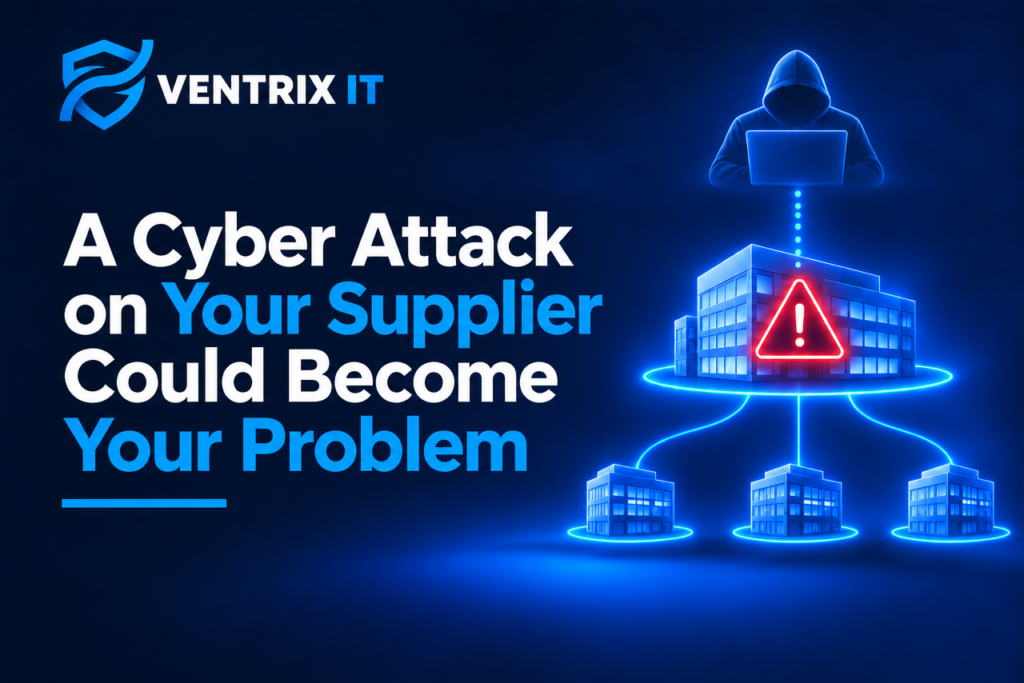
Your business might have strong passwords, secure computers and reliable cybersecurity software. But what happens when a company you trust with your data or access to your systems suffers a cyber attack? Recent incidents involving major businesses, including UK retailer Next, highlight why organisations need to pay attention to the security of their suppliers.
Recent Cyber Attacks Highlight the Risk of Third-Party Suppliers
Several major organisations have recently disclosed cyber incidents involving third-party suppliers, highlighting how businesses can be affected by security weaknesses outside their own IT environments.
On 23 November 2026, UK retailer Next confirmed that one of its online suppliers had suffered a cyber incident, allowing attackers unauthorised access to some information relating to the retailer.
Next said its investigation was ongoing, but current evidence indicated that no customer personal data had been compromised. The company also said it was confident its own systems had not been breached.
The announcement followed disclosures from JPMorgan Chase, Visa and Mastercard on 19 November concerning cyber incidents involving third-party service providers.
JPMorgan Chase said attackers may have accessed marketing information held by its suppliers, potentially including customer names and email addresses. Mastercard reported that a limited number of email addresses belonging to customers in a specific benefits programme had been exposed. Visa also confirmed an incident involving a third-party provider in the Asia-Pacific region.
Importantly, the companies said their payment networks and card information had not been affected.
Although the incidents were separate disclosures and there is no confirmation that they involved the same supplier or attack, they highlight a common issue: businesses often rely on external companies to handle information and provide essential services.
When one of those suppliers experiences a security incident, the consequences can extend to the organisations that depend on them.
How Can a Cyber Attack on a Supplier Affect Your Business?
Most businesses rely on more external providers than they might initially realise.
Your accountant might handle payroll information, a marketing agency could have access to customer records, and a software provider might store important business documents in the cloud.
IT support companies, website developers, payment providers and cloud service platforms may also have access to business systems or sensitive information.
These relationships are useful and often essential. However, every organisation that stores your information or has access to your systems introduces another security consideration.
There are several ways a supplier-related incident could affect your business.
- Your Business Data Could Be Exposed
External suppliers often hold information on behalf of their customers. This might include employee details, customer records, contact information, financial documents or commercially sensitive data.
If a supplier’s systems are compromised, information belonging to your business could potentially be exposed even if your own network remains secure.
The amount and sensitivity of the information involved will depend on what the supplier holds and how its systems are protected.
- Attackers Could Exploit Supplier Access
Some suppliers require direct access to business systems to carry out their work.
For example, an IT provider might have remote access to computers and servers, while a software developer could have access to a website or cloud environment.
If an attacker compromises a supplier’s account or remote access tools, they may be able to misuse those permissions.
The risk depends on what access has been granted, whether additional security controls are in place and how closely that access is monitored.
- Business Operations Could Be Disrupted
Businesses frequently depend on external providers to keep everyday operations running.
If a supplier experiences an outage or security incident, services could become unavailable. This might affect access to business applications, communications, payment services, document management or other essential tools.
Even when your own systems have not been compromised, disruption to a critical supplier can still affect your ability to operate.
- Your Customers Could Lose Confidence
A security incident involving a supplier can also create reputational problems for the businesses relying on them.
Customers are unlikely to distinguish between the organisation they deal with and the external provider holding their information. They may simply see it as a failure to protect their data.
This can lead to difficult conversations, additional scrutiny and a loss of confidence, particularly where personal or commercially sensitive information is involved.
Why Small Businesses Should Pay Attention
Third-party cyber attacks are not just a concern for large banks and retailers.
Smaller businesses often rely on external companies for services they do not have the resources or expertise to manage internally.
It is quite common for an SME to use separate providers for IT support, website hosting, payroll, accounting, marketing, cloud software and customer management.
Each relationship needs to be considered from a security perspective.
A business might have good protection across its own computers and email accounts, but still have little understanding of which external companies can access its information, what permissions they have or how that access is protected.
The important thing is not to avoid using suppliers. It is to understand the risks they introduce and make sure those risks are properly managed.
How Can Businesses Reduce the Risk of Third-Party Cyber Attacks?
You cannot guarantee that an external supplier will never suffer a cyber attack. However, there are practical steps you can take to reduce the potential impact on your business.
- Understand Which Suppliers Have Access to Your Business
Start by identifying the external companies that store your business information or have access to your systems.
This should include more than obvious IT providers. Consider website developers, cloud software services, payroll providers, marketing agencies and other organisations that handle sensitive information.
Establish what information they hold, which systems they can access and whether they use other companies to deliver their services.
- Limit Supplier Access
External suppliers should only have access to the information and systems they actually need.
For example, a supplier responsible for maintaining your website should not automatically have access to unrelated business systems or employee information.
Use individual accounts rather than shared credentials wherever possible, apply multi-factor authentication and review permissions regularly.
Access should also be removed when a supplier no longer needs it or a working relationship ends.
- Check the Security of Your Suppliers
Before giving a supplier access to important systems or information, consider whether they have suitable security measures in place.
Depending on the service and the sensitivity of the information involved, this might include asking about:
- How they protect customer information.
- Whether they use multi-factor authentication.
- How they manage access to their own systems.
- How security incidents are detected and reported.
- Whether they use subcontractors or other third-party providers.
The Information Commissioner’s Office (ICO) recommends carrying out appropriate security due diligence before granting IT suppliers access to an organisation’s networks and assets.
- Monitor Accounts and Connections
Supplier access should not be granted and then forgotten about.
Businesses should periodically review which external accounts and connections remain active, whether permissions are still appropriate and whether any unusual activity has been detected.
Where external providers have access to Microsoft 365, cloud platforms or business networks, appropriate monitoring can help identify suspicious sign-ins or unexpected behaviour.
- Know What Happens if a Supplier Is Compromised
Businesses should have a clear process for responding if an important supplier reports a security incident.
This could include temporarily suspending access, changing relevant credentials, reviewing activity logs, identifying information that may have been exposed and contacting other affected parties where necessary.
It is also important to understand how quickly suppliers are expected to notify you of security incidents and who is responsible for coordinating the response.
Having this process established beforehand makes it easier to act quickly when something happens.
Where Does Your IT Provider Fit In?
Managing supplier security is not simply a case of asking every external company whether it is secure.
Businesses need a clear understanding of how their own IT environment connects to external services and what would happen if one of those connections were compromised.
A managed IT service provider can help with this by maintaining visibility over your technology, reviewing supplier access and ensuring appropriate security controls are in place.
This includes managing user permissions, configuring multi-factor authentication, monitoring devices and accounts, maintaining systems and helping investigate suspicious activity.
An MSP cannot guarantee the security of every external supplier or control systems outside its responsibility. However, it can help reduce unnecessary exposure within your own environment and make sure supplier access is not overlooked.
For businesses without a dedicated internal IT team, having someone responsible for these areas provides valuable oversight and a clear point of contact when a security concern arises.
Keep Your Business IT Secure With Ventrix IT
At Ventrix IT, we help businesses across Kent and the South East manage, maintain and secure their technology.
Our managed IT services combine day-to-day technical support with proactive maintenance and cybersecurity, helping businesses reduce risks and keep their systems running reliably.
We take the time to understand how your business operates, which technologies you rely on and where improvements could be made. This includes helping manage user access, strengthen Microsoft 365 security, maintain business devices and monitor for potential threats.
Rather than leaving you to navigate IT and security concerns alone, you have a dedicated team to provide support, advice and ongoing management.
Because good IT support is about more than fixing problems when they happen. It is about understanding your technology, taking responsibility and helping prevent avoidable issues before they affect your business.
Big Enough to Support. Small Enough to Care.
Find out more about Ventrix IT’s managed IT services and how we help businesses across Kent and the South East keep their technology secure and properly managed.
Sources
- Reuters: UK retailer Next flags cyber breach at online supplier, 23 November 2026
- Reuters: JPMorgan, Visa and Mastercard say third-party vendors targeted in cyberattack, 19 November 2026
- Information Commissioner’s Office: IT supplier relationships
- National Cyber Security Centre: Supply chain security guidance